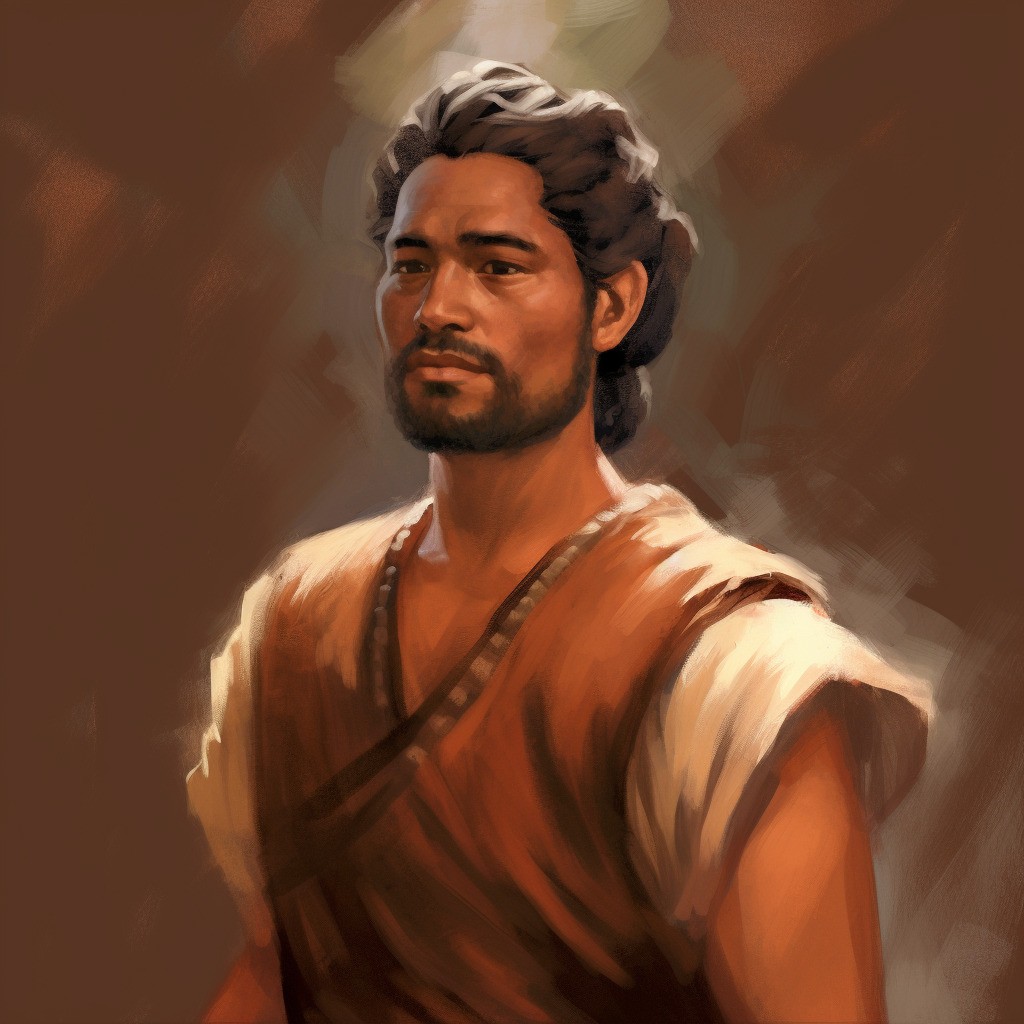
Amaleki, son of Abinadom, was the last keeper of the small plates of Nephi, the ninth in the line of record keepers descended from Nephi. He was born in the days of Mosiah; the record does not say whether in the land of Nephi or in Zarahemla (Omni 1:23).
His portion of the record begins with Mosiah, who was warned by the Lord to flee the land of Nephi with all who would follow him. They were led through the wilderness to the land of Zarahemla, where they found the people of Zarahemla, who had come from Jerusalem at the time Zedekiah was carried captive to Babylon. The two peoples united, and Mosiah was made their king (Omni 1:12-19). The Mulekites had brought no records with them, and their language had become corrupted over the generations (Omni 1:17).
Amaleki lived to see Mosiah’s death and the reign of his son Benjamin. In Benjamin’s days there was war and bloodshed between the Nephites and the Lamanites, and Benjamin drove the Lamanites out of the land of Zarahemla (Omni 1:23-24). Having no descendants to receive the record, Amaleki delivered the plates to Benjamin, whom he judged a just man, and exhorted all to come unto God and believe in prophecy, revelation, the ministering of angels, the gift of speaking with tongues, and the gift of interpreting languages, and all things good, since “there is nothing which is good save it comes from the Lord” (Omni 1:25). These gifts of communication were especially fitting given that Amaleki himself had witnessed the need to bridge a language barrier between two peoples. Benjamin placed the small plates with the larger record handed down by the kings (Words of Mormon 1:10).
He recorded two attempts to return to the land of Nephi, the land of inheritance: a first party whose strong but obstinate leader caused contention and all of whom were slain except fifty, who came back to Zarahemla, and a second party that took others and set out again. Amaleki’s own brother went with the second group, and Amaleki never learned what became of them (Omni 1:27-30). He closed by appealing to his people to come unto Christ, partake of his salvation, and endure to the end: “as the Lord liveth ye will be saved” (Omni 1:26). The plates being full, he ended his writing (Omni 1:30). His record was later abridged by Mormon, who noted that Benjamin was the king “of whom Amaleki spake” (Words of Mormon 1:3).