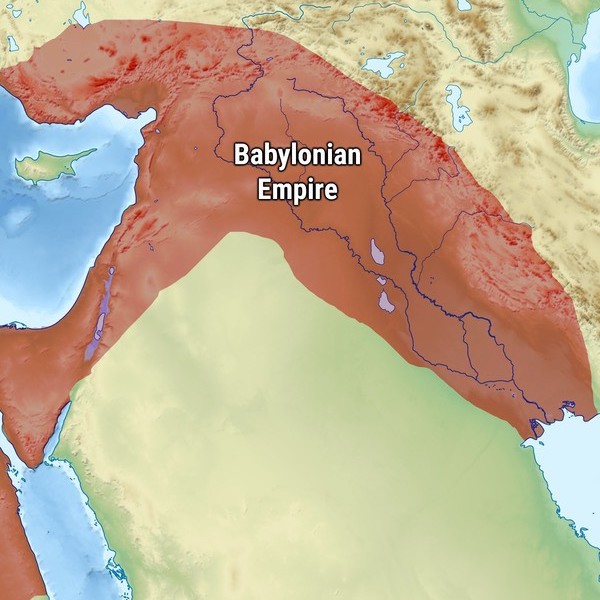
Babylon, a city and empire on the lower Euphrates, appears in the record chiefly through the prophecies Lehi and Nephi made before leaving Jerusalem. Lehi read that Jerusalem would be destroyed and many of its inhabitants carried away captive into Babylon (1 Nephi 1:13). Nephi recorded that after the city was destroyed the captives would in time return and possess again the land of their inheritance (1 Nephi 10:3). The deportation came as foretold: Jerusalem was destroyed soon after Lehi left, save for those carried captive into Babylon (2 Nephi 25:10), including the people of Zarahemla, who came out from Jerusalem when Zedekiah, king of Judah, was carried away captive into Babylon (Omni 1:15), and among whom was Mulek, a son of Zedekiah (Helaman 8:21).
Nephi also quoted Isaiah’s prophecies against Babylon itself, “the burden of Babylon, which Isaiah the son of Amoz did see” (2 Nephi 23:1). Babylon, called the glory of kingdoms and the beauty of the Chaldees, was to be overthrown as God overthrew Sodom and Gomorrah (2 Nephi 23:19), with its name, remnant, son, and nephew cut off (2 Nephi 24:22). A proverb was to be taken up against the king of Babylon, the “golden city” that had ceased (2 Nephi 24:4). The Lord would do his pleasure on Babylon and bring his arm upon the Chaldeans (1 Nephi 20:14), and Babylon would be destroyed while the Jews remained scattered among the nations (2 Nephi 25:15). The captives were called to go forth out of Babylon and flee the Chaldeans, declaring that the Lord had redeemed his servant Jacob (1 Nephi 20:20).
Nephi’s vision also extends the Babylon image beyond the ancient empire. In a vision of the latter days, an angel showed Nephi “the formation of a great church” among the Gentiles (1 Nephi 13:4) — a body later identified as “the church of the devil,” “the mother of abominations,” and “the whore of all the earth” (1 Nephi 14:10). All churches built up to get gain and all who belong to the kingdom of the devil “must be consumed as stubble,” the note on which Nephi closes his Isaiah commentary (1 Nephi 22:23). Babylon’s fall is thus not merely past history in the Book of Mormon but a pattern with a future fulfillment.