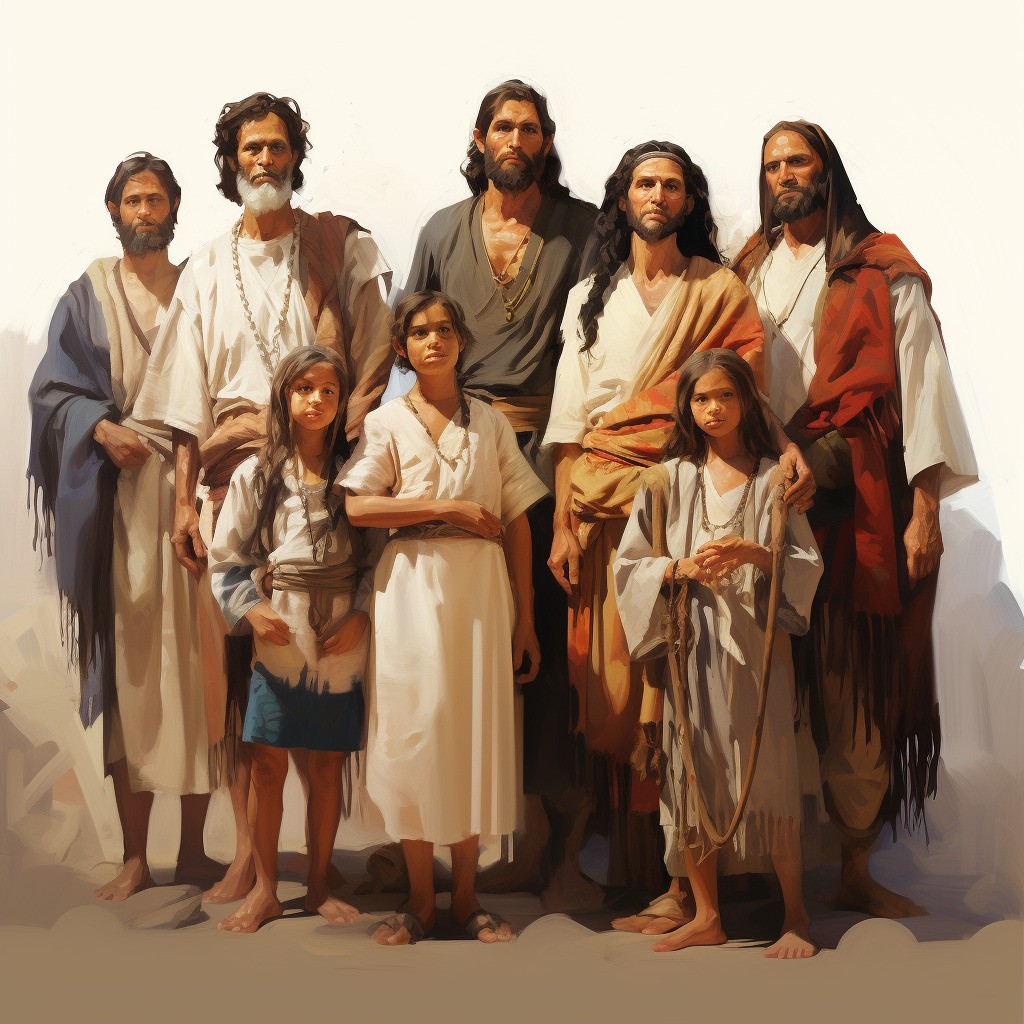
The Nephites were named after Nephi, a son of Lehi, the prophet who led his family from Jerusalem to a promised land around 600 B.C. (1 Nephi 2:20). The group formed when Nephi, warned by the Lord, departed from his elder brothers and took with him his own family, Zoram, his brothers Sam, Jacob, and Joseph, his sisters, and all who believed the warnings and revelations of God given through him (2 Nephi 5:6-9). Those friendly to Nephi were called Nephites, in contrast with the Lamanites, named after Nephi’s eldest brother Laman, who sought to destroy the people of Nephi (Jacob 1:13-14).
The name covered more than lineage. Jacob records that the people not called Lamanites were grouped as Nephites, Jacobites, Josephites, and Zoramites, and that he would call all those friendly to Nephi by the single name Nephites (Jacob 1:13-14). After the ministry of Christ, the divisions of -ites ceased and the people were united as the children of Christ (4 Nephi 1:17). In the 231st year a faction revolted, and those who remained true believers in Christ were again called Nephites, along with Jacobites, Josephites, and Zoramites, regardless of descent, while those who rejected the gospel were called Lamanites, Lemuelites, and Ishmaelites (4 Nephi 1:36-38).
The Nephites declined into iniquity and internal strife and were destroyed by the Lamanites around A.D. 385. When Mormon saw his people’s mourning and lamentation, his heart rejoiced, supposing that the Lord would be merciful and they would become righteous again; but he recorded that “this my joy was vain, for their sorrowing was not unto repentance, because of the goodness of God; but it was rather the sorrowing of the damned” — their grief was sorrow over consequences, not the godly sorrow that leads to repentance (Mormon 2:12-13). Mormon, a Nephite general and historian, gathered his people to the land of Cumorah, made his record from the plates of Nephi, and hid the sacred records entrusted to him in the hill Cumorah, keeping only a few plates to give to his son Moroni (Mormon 6:6). Moroni finished his father’s record after the battle at Cumorah, when the surviving Nephites were hunted down until they were destroyed and Mormon himself was killed, leaving Moroni alone to write and hide up the records (Mormon 8:1-4).