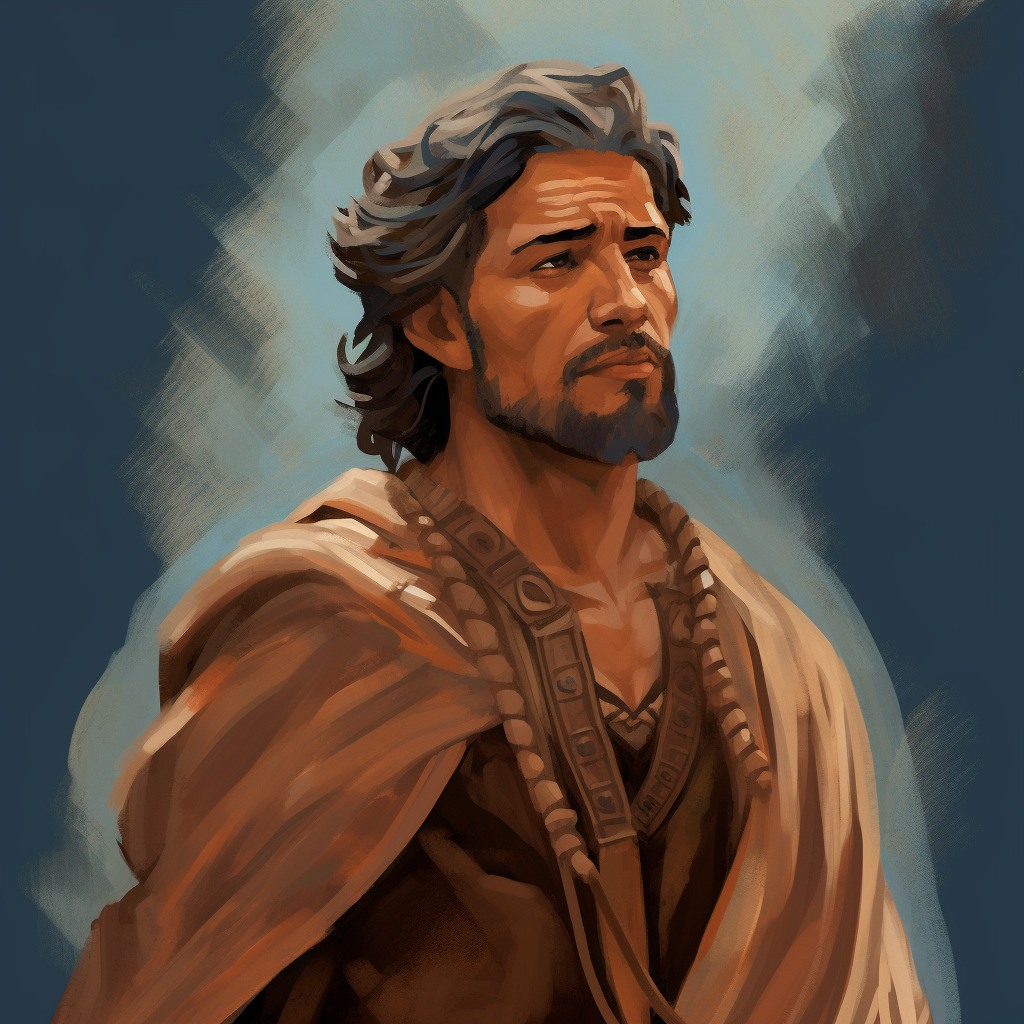
Jacob² was the elder of two sons born to Lehi and Sariah in the wilderness during the family’s journey from Jerusalem, his younger brother being Joseph (1 Nephi 18:7). As a young child he and Joseph were grieved by the afflictions of their mother during the sea voyage, when Laman and Lemuel had bound Nephi and would not loose him (1 Nephi 18:19).
After the family reached the promised land and the people divided, Nephi consecrated Jacob and Joseph as priests and teachers over the people (2 Nephi 5:26; Jacob 1:18). Jacob delivered recorded sermons to the Nephites calling them to faith in Christ (2 Nephi 6–10; Jacob 2–3). The most prominent of these was a temple sermon in which he rebuked the Nephite men for pride, inequality, and taking plural wives without divine sanction, declaring that David and Solomon’s many wives and concubines were “abominable before me, saith the Lord” (Jacob 2:24). He described the Lord’s awareness of the sorrow of Nephite women whose husbands had broken their hearts and whose children had lost confidence in their fathers, and warned that such conduct brought a curse (Jacob 2:31–35; Jacob 3:1–7).
Jacob was confronted by Sherem, who preached that there would be no Christ and sought to shake Jacob from his faith. Jacob could not be shaken, having seen angels who ministered to him and heard the voice of the Lord (Jacob 7:5). When Sherem demanded a sign, Jacob said that if God smote him it would be a sign; Sherem fell to the earth, and before dying confessed the Christ and admitted he had been deceived by the devil. Peace was restored among the people, who returned to searching the scriptures (Jacob 7:14-23).
Nephi had given Jacob a commandment to keep the small plates, writing on them the most sacred preaching, revelation, and prophecy and handing them down to his seed (Jacob 1:1-4). Among his writings Jacob recorded the allegory of the olive tree, which he attributed to the prophet Zenos and which concerns the covenant scattering and gathering of the house of Israel across generations; Jacob’s own summary after the allegory declares, “How merciful is our God unto us, for he remembereth the house of Israel, both roots and branches” (Jacob 5; Jacob 6:4–5).
Near the end of his life Jacob gave the plates to his son Enos, who promised to keep Nephi’s commands concerning them (Jacob 7:27).