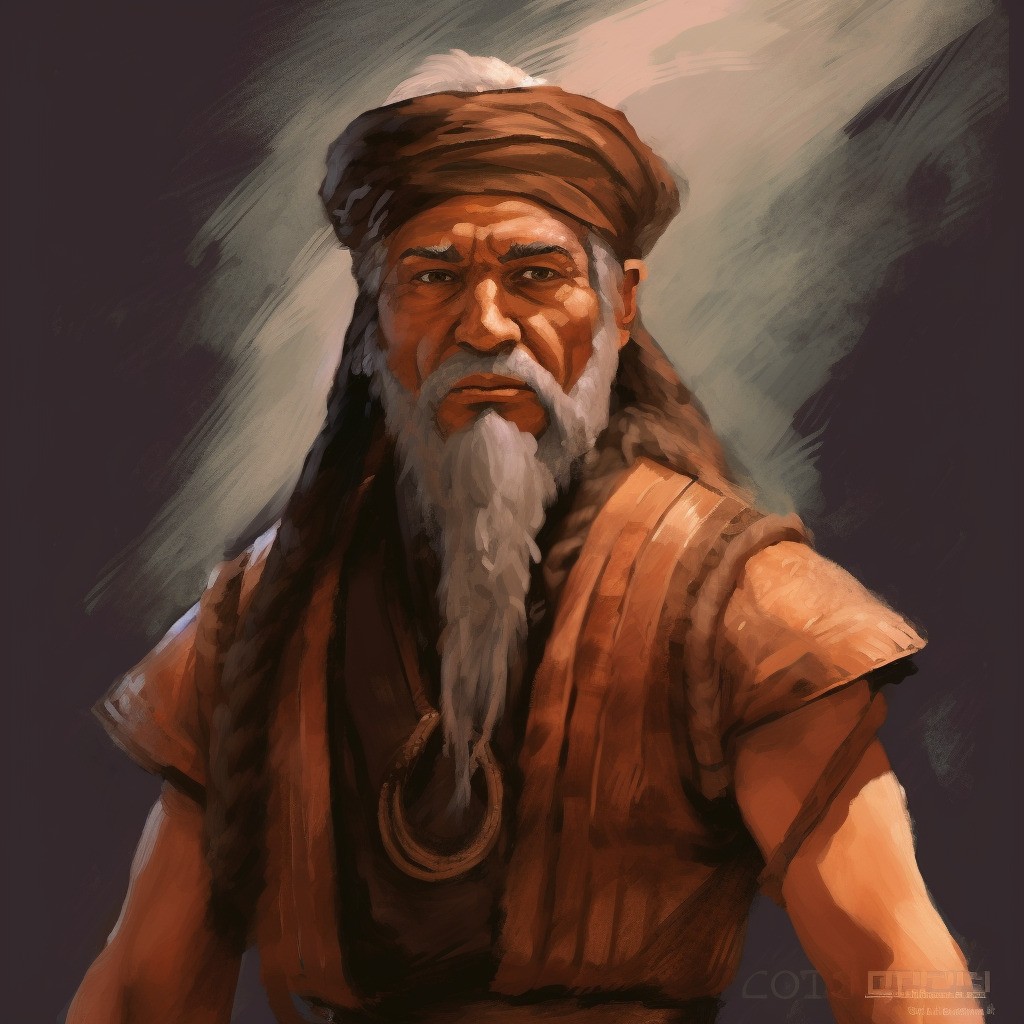
Ishmael was an inhabitant of Jerusalem, an Ephraimite by descent, who joined Lehi’s family in the wilderness around 600 BC. After Lehi’s sons were told they should take wives, the Lord commanded Nephi and his brothers to return to Jerusalem and bring Ishmael and his household into the wilderness (1 Nephi 7:2). Nephi’s party gained Ishmael’s favor, and the Lord softened the heart of Ishmael and his household, so that they left with the brothers for Lehi’s tent (1 Nephi 7:4–5). Lehi’s own family was of the tribe of Manasseh, so the two households joined the lineages of Joseph’s sons, Ephraim and Manasseh.
Ishmael’s household included his wife, five daughters, and two sons who had families of their own (1 Nephi 7:6). His daughters became the wives of the company’s men: Nephi and his brothers took daughters of Ishmael, and Zoram married the eldest (1 Nephi 16:7). Lehi’s younger sons Jacob and Joseph were born later in the wilderness (1 Nephi 18:7).
On the return march, Laman and Lemuel, two of Ishmael’s daughters, and his two sons rebelled and sought to return to Jerusalem; when Nephi rebuked them, they bound him and meant to leave him to die (1 Nephi 7:6). One of Ishmael’s daughters, his wife, and one of his sons pleaded with Nephi’s brothers until they relented (1 Nephi 7:19).
Ishmael died and was buried at a place called Nahom (1 Nephi 16:34). His daughters mourned and murmured against Lehi for bringing them out of Jerusalem, and they wished to return there. His descendants were later counted among both Nephites and Lamanites, and the Lamanite territory Ammon entered on his mission was called the land of Ishmael, named after his sons, who became Lamanites (Alma 17:19).