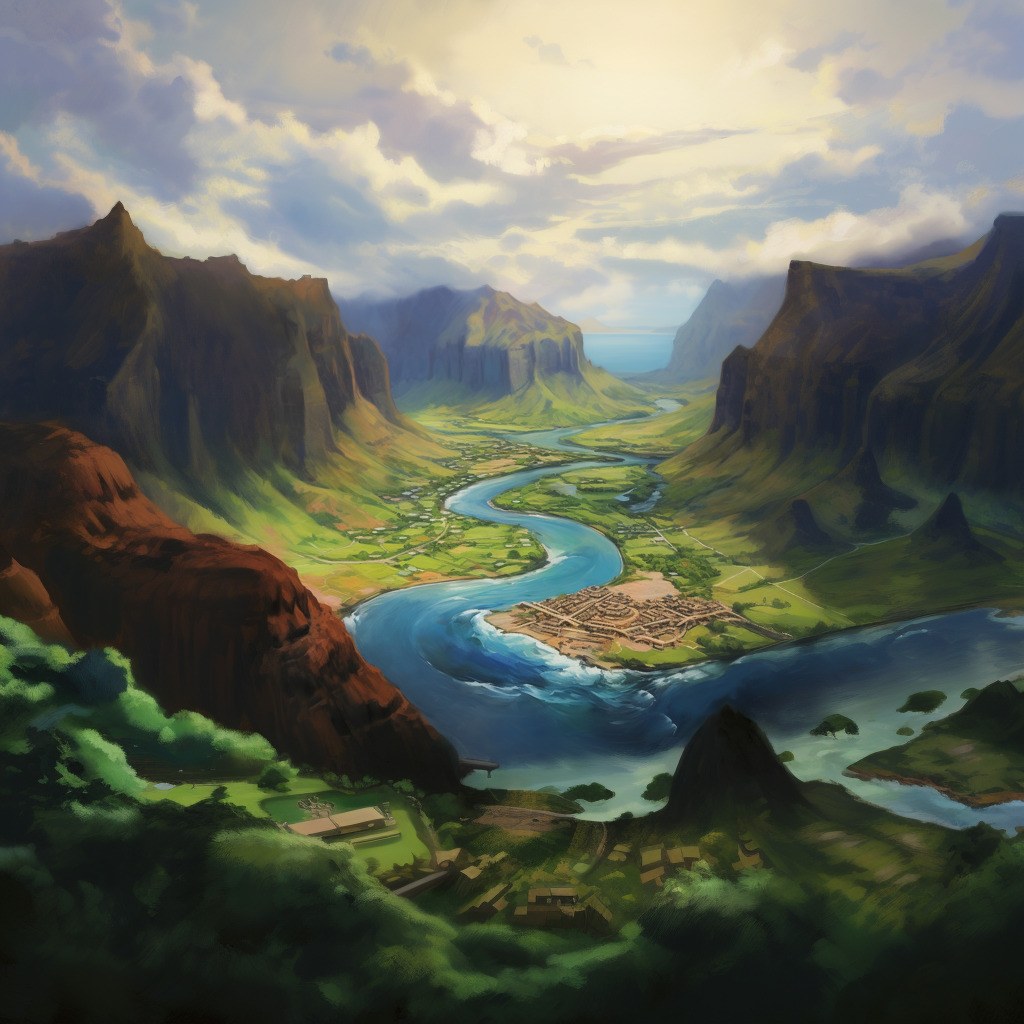
The Land of Zarahemla lay in the northern part of the land southward, along the river Sidon, which ran by the land of Zarahemla (Alma 2:15). It was settled by the Mulekites, who left Jerusalem about the time Zedekiah, king of Judah, was carried captive to Babylon in the sixth century B.C. and crossed the great waters to their landing place (Omni 1:15, Alma 22:29-31). Around 200 B.C. Mosiah1, warned to flee the land of Nephi, led his people through the wilderness and found the people of Zarahemla, named for their leader Zarahemla. The two peoples united and made Mosiah their king (Omni 1:12-19).
The temple at Zarahemla was the site of King Benjamin’s great covenant convocation, in which the assembled multitude pitched their tents round about the temple, each with its door facing toward the temple, and Benjamin preached from a tower because the crowd was too great to fit within the temple walls (Mosiah 1:18; 2:5-7). At the close of that assembly the people entered a covenant and were given a new name, being called “the children of Christ, his sons, and his daughters” (Mosiah 5:7).
Under king Mosiah’s reign Alma1 established seven churches throughout the land of Zarahemla (Mosiah 25:15-23), and at the close of the monarchy Alma2 became the first chief judge over the reign of judges seated there (Mosiah 29:42). Samuel the Lamanite came into the land of Zarahemla and preached repentance to its people (Hel. 13–16). The land changed hands repeatedly in war: dissenters under Pachus seized the city, set up a king, and allied with the Lamanites until Moroni and Pahoran retook it and Pachus was slain (Alma 61-62:9); the Lamanite-allied Coriantumr stormed and took the city before Moronihah recovered it (Hel. 1:14-33); and dissenters with a Lamanite army held the land until Moronihah regained half of it (Hel. 4:1-17).
The city of Zarahemla took fire and its inhabitants were burned at the death of Jesus Christ (3 Ne. 8:8, 24; 9:3). It was built again in the first century A.D. and was covered with buildings and people as numerous as the sand of the sea when Mormon was carried there as a child of eleven (4 Ne. 1:8, Morm. 1:6-7). In the fourth century A.D. war broke out again in the borders of Zarahemla, by the waters of Sidon (Morm. 1:10).